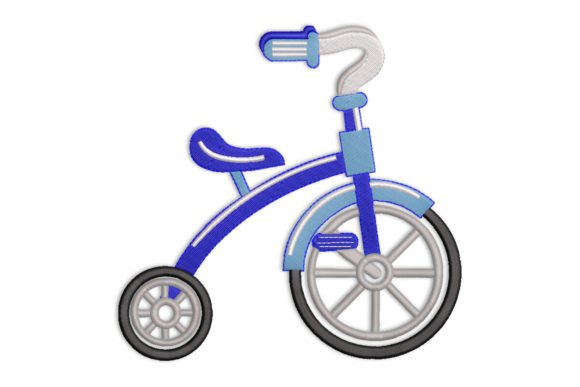
Tricycle Toy Review for Small Business Merch
As an experienced embroidery designer who has spent years refining the art of digitizing and stitching for commercial brands, I often look at a new design file and immediately ask: "Does this build trust?" When evaluating Tricycle Toy, my first impression is one of genuine whimsy and charm. The description promises to embellish fabrics with a touch of playfulness, which suggests this design is perfect for businesses that want to project a friendly, approachable, and creative image.
This machine embroidery design is not just a decorative element; it is a potential cornerstone for your brand identity. Whether you are running a boutique, a handmade shop, or a creative studio, the decision to use Tricycle Toy on your merchandise can significantly impact customer engagement. It feels professional yet inviting, making it an excellent candidate for small business merch where personality matters as much as quality.
Real-World Application for Branded Goods
In the world of custom apparel and product design, versatility is key. I have visualized Tricycle Toy being applied across various high-value items for local businesses. Imagine a cozy café using this design as a chest logo accent on their barista aprons. The playful nature of the tricycle fits perfectly with a family-friendly atmosphere, instantly communicating warmth to customers walking in.
For pet brands or florists, this design could serve as a delightful detail on tote bags used for gift wrapping or product packaging. A bakery might stitch it onto the side of a canvas bag used for carrying pastries, turning a simple utility item into a memorable branded asset. In these scenarios, the embroidered patch application is particularly strong. By creating a durable patch featuring Tricycle Toy, you add a tactile dimension to your products that mass-produced prints cannot match.
Small business owners often struggle with creating a cohesive look across different product lines. This digital embroidery file offers a solution by acting as a unifying visual theme. It works beautifully as a sleeve detail on work shirts or as a primary mark on caps. When a customer sees this consistent design on a cap, a tote, and an apron, it reinforces brand identity and creates a sense of professionalism that elevates the perceived value of your finished product.
Strategic Use in Uniforms and Event Merch
When considering staff uniforms, Tricycle Toy adds a layer of human connection. For event merch, such as t-shirts for a community craft fair or a children's festival, this design resonates deeply with the target audience. It transforms standard workwear into a statement piece. However, the success of this application depends heavily on execution.
I have seen many commercial embroidery projects fail because the designer did not consider the physical limitations of the fabric. If you plan to use this design on dark uniforms, you must carefully select thread colors to ensure contrast. A light-colored tricycle on a navy blue shirt will pop, but the same design on black fabric might get lost without proper underlay and stabilizer support. Always test the thread colors against your specific fabric texture before committing to a large run.
Navigating Technical Challenges and Limitations
While Tricycle Toy is charming, there are areas where caution is required. As a reviewer, I must highlight that small patch sizes can be tricky. If you intend to create a tiny lapel pin or a very small cap front logo, the details of the tricycle may become muddy. High stitch density is common in detailed designs, and if the design is too small, the stitches can bunch up, ruining the aesthetic.
Curved surfaces like the front of a baseball cap present another challenge. While the design is suitable for cap embroidery, the curvature can distort fine outlines if the digitization does not account for the stretch of the hat material. Similarly, items that require frequent washing, such as kitchen towels or heavy-duty aprons, need robust construction. You must ensure the stitch density is sufficient to withstand abrasion without pulling threads from the fabric.
Textured fabrics, such as fleece or bouclé, can also obscure the definition of the design. In these cases, the whimsical charm might be lost in the weave of the material. It is crucial to inspect spacing and confirm the hoop size before production. If the design requires a larger hoop than your garment allows, you may need to adjust the placement or scale of the Tricycle Toy file.
Protecting Your Brand Reputation
Your embroidered goods are a direct reflection of your company's standards. A poorly executed design can erode customer trust. If the embroidery file results in loose threads or misaligned stitches, customers may question the quality of your actual products. Conversely, a clean, well-stitched application of Tricycle Toy signals attention to detail and pride in your work.
To maintain visual consistency, compare this design alongside your other design assets. Does the style match your logo? Is the level of detail appropriate for your brand voice? If your brand is modern and minimalist, a highly ornate tricycle might feel out of place. However, if your brand celebrates handmade craftsmanship, this design is likely a perfect fit.
Essential Designer Notes for Production
Before you upload Tricycle Toy to your embroidery machine, follow these practical steps to ensure a successful outcome. First, test the design in black and white. This helps you visualize the stitch flow and density without the distraction of color. It reveals whether the design holds its shape when simplified.
Next, review the file specifications. Check the stitch count and file format compatibility with your software. Since specific technical details like exact stitch counts or license terms were not provided in the initial description, you must verify these directly with the source. Confirming commercial licensing is vital; you do not want to risk legal issues by using a personal-use file for branded merchandise.
Create a printable mockup for client approval. Showing a realistic representation of how Tricycle Toy looks on a tote bag or apron can help stakeholders visualize the final result and approve the project faster. Additionally, always test on real fabric using the proper stabilizer. The choice of stabilizer can make the difference between a crisp, professional finish and a puckered, amateur-looking mess.
Finally, inspect the spacing and confirm the hoop size matches your intended garment. Ensure that the design is not too close to seams or edges, which can cause shifting during the stitching process. By taking these precautions, you ensure that your finished product meets the high standards expected by today's discerning buyers.
Ultimately, Tricycle Toy offers a wonderful opportunity to infuse your small business with character. Whether used as a standalone embroidered patch or as a subtle accent on custom apparel, it has the potential to enhance your brand identity. Just remember that the magic lies in the execution. With careful planning, testing, and attention to detail, this design can become a beloved symbol of your handmade product line.